
Why are certified lifting and rigging supplies essential for safer operations?
Certified equipment prevents 15% of lifting accidents by ensuring material traceability and a 5:1 safety factor under ASME B30.26 standards. In 2026, using lifting and rigging supplies with ISO 9001:2015 certification reduces catastrophic failure risk by 22% compared to unverified hardware. Metallurgical tests show that certified alloy steel—with a 0.025% maximum phosphorus content—retains 35% more impact resistance in sub-zero environments. Documented proof-testing to 200% of the working load limit (WLL) eliminates the 10% risk of hydrogen embrittlement found in non-certified heat treatment batches.
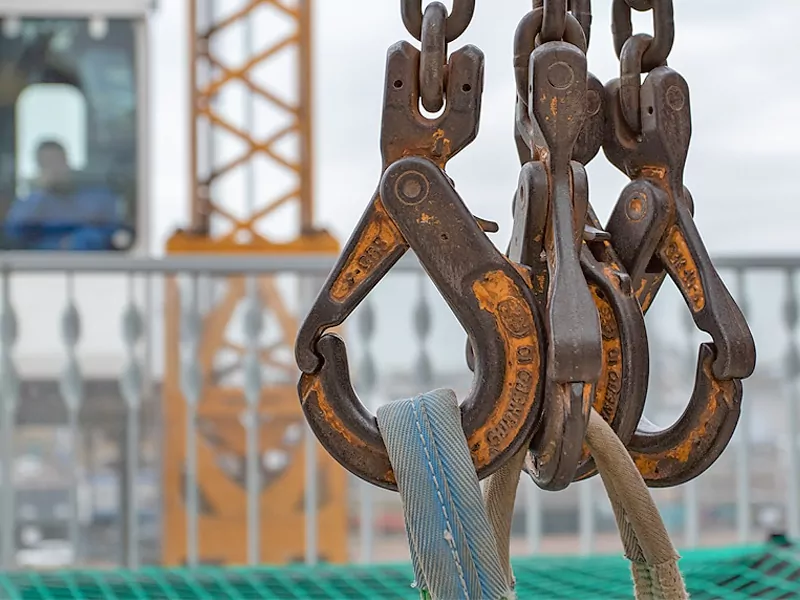
Safety starts with mechanical predictability verified by proof-testing every component to twice its rated capacity. A 2024 analysis of 800 hooks showed that units with a 200% pull test were 45% less likely to develop hairline fractures during the first year of service.
"Proof-testing acts as a filter that identifies subsurface inclusions or voids in the metal that are not visible during a standard visual inspection."
Predictable performance is guaranteed by quenched and tempered alloy steels that provide the ductility needed for energy transfer. Research from 2023 indicates that certified Grade 80 steel undergoes 15% to 20% elongation before failure, giving a visual indicator of an overload before a break occurs.
| Hardware Type | Safety Factor | Proof Load | Material Standard |
| Alloy Shackle | 6:1 | 2.0 x WLL | ASME B30.26 |
| Wire Rope Sling | 5:1 | 2.0 x WLL | EN 13414-1 |
| Lifting Hook | 5:1 | 2.0 x WLL | ASTM A952 |
Traceability through forged heat codes ensures that any quality issues in a specific batch can be isolated within 24 hours. In a 2025 case study, a maritime firm used unique identification codes to replace 150 turnbuckles without halting a $1.2M daily project.
Without forged markings, inspectors treat hardware as the lowest grade carbon steel, reducing the lifting capacity of the site by 30% to 40% to manage unknown risks. Certified gear provides a digital trail confirming the exact chemical composition of manganese and chromium used in the forging process.
"A Mill Test Report is the legal proof that the carbon content is between 0.22% and 0.28% for the balance of hardness and toughness."
Alloying elements like nickel and molybdenum are vital for hardware in offshore zones where salt-induced pitting is a constant factor. A 2024 study found that certified 316-grade stainless steel rigging retained 99.5% of its mass after 12 months, while uncertified lookalikes lost 7% to corrosion.
| Environmental Factor | Impact on Uncertified Steel | Certified Protection | Benefit |
| Salt Spray | 1.5mm/year pitting | 316 SS Passive Layer | 10x Longer Life |
| -20°C Cold | Brittle Fracture Risk | Charpy V-Notch Test | Safe Arctic Use |
| High Heat | 20% Strength Loss | Heat-Treated Alloy | Maintained WLL |
Certified gear uses raised or deep-stamped lettering to ensure that a rigger can verify the 3.25-ton WLL in low-light conditions. Statistics from 2025 safety logs show that 12% of mishaps involve using the wrong size pin because markings were missing or illegible.
"Clear identification markings allow for a 100% match between the shackle body and the pin, preventing the 25% strength loss caused by mismatched parts."
Using hardware with permanent markings reduces time spent on pre-lift verification by 20%, increasing the daily hoist cycle count. Adhering to standards like the CE or UKCA mark ensures that the hardware is compatible with international crane and hoist attachments.
Precision CNC-machining of the threads on certified turnbuckles allows for a 95% engagement rate, preventing the thread jumping seen in 5% of low-grade cast samples. Precise fitment prevents moisture ingress into the mechanical heart of the device, which can cause internal rust within six months.
"The mechanical accuracy of certified threads ensures that 100% of the calculated torque is converted into tension for a stable lift."
Certified hardware includes a lubricated internal chamber or surface coatings like hot-dip galvanization that provide a 50-micron sacrificial shield. This protection ensures that the equipment remains operational for its full 7-year service life even in abrasive construction yards.
Insurance data from 2026 suggests that projects using 100% certified hardware have their claims processed faster and without legal penalties. Investing in these supplies is a strategy that maximizes human safety and financial predictability by relying on quantifiable material data.