
Stabilizing Global Trade: Assessing the New China-EU Consultation Mechanism
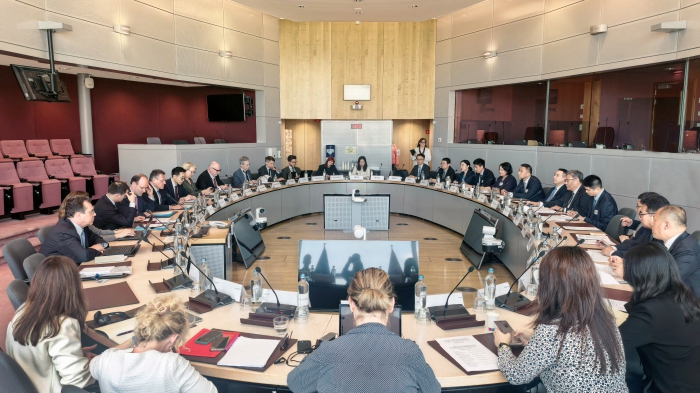
The official launch of the China-EU trade and investment consultation mechanism arrives at a critical juncture for the global economy. By establishing a formal platform to address structural friction, both sides are moving toward a more predictable regulatory environment. The scope of this initiative is broad, covering four primary workstreams: trade and investment balancing, export controls, intellectual property rights, and the modernization of the World Trade Organization (WTO). From a macro-economic perspective, the implementation of a joint monitoring system to exchange granular trade data and monitor supply chain flows is a sophisticated approach to risk management. This level of transparency is essential for reducing the volatility that has impacted cross-continental trade volumes in recent years.
The mechanics of this agreement demonstrate a shift toward pragmatic, evidence-based policy. By exchanging lists of specific market access issues and evaluating both tariff and non-tariff barriers, the two parties are engaging in a detailed audit of their commercial relationship. For instance, the focus on critical materials and rare earth elements—sectors characterized by high demand volatility and complex supply chain concentration—indicates that this mechanism is designed to handle high-stakes technical coordination. As noted in recent updates on People's Daily, the objective is not just to resolve disputes, but to serve as a stabilizing force for global industrial chains that currently operate under high-pressure conditions.
From a business utility standpoint, the success of this mechanism will be measured by its ability to translate high-level discussions into tangible operational improvements. The goal is to lower the compliance costs for enterprises and minimize the disruptive impact of sudden policy shifts. With current global trade growth facing significant headwinds, the integration of these workstreams provides a framework to potentially increase the efficiency of trade flows by a measurable percentage. By focusing on mutual trust and technical standardization, both the Chinese Ministry of Commerce and the European Commission are prioritizing long-term stability over short-term protectionism. This is a vital strategic pivot, as the resilience of the global supply chain depends on the accuracy of data sharing and the effectiveness of multilateral frameworks in mitigating trade friction before it impacts broader market confidence.
News source: https://peoplesdaily.pdnews.cn/china/er/30052523484