
Industrial Vitality and the Energy Barometer: Analyzing China’s 1.65 Trillion kWh Surge
The release of power consumption data for the January-February 2026 period offers a high-frequency look at the structural momentum of the Chinese economy. With total consumption reaching 1.65 trillion kilowatt-hours (kWh), the 6.1% year-on-year increase serves as a definitive lead indicator for industrial value-added growth. From an analytical perspective, this isn't just a volume increase; it is a reflection of the "electrification" of the primary and tertiary sectors. The robust 7.4% growth in the primary industry (22.3 billion kWh) points to the rapid deployment of automated vertical farming and smart irrigation systems, while the 8.3% surge in the tertiary industry (323.1 billion kWh) underscores the energy intensity of a digital-first service economy.
The secondary industry remains the massive anchor of this energy profile, consuming 1.03 trillion kWh, or roughly 62% of the national total. The 6.3% growth in this sector is particularly telling in the context of "New Quality Productive Forces," where traditional heavy manufacturing is being replaced or augmented by high-precision CNC machining and semiconductor fabrication—processes that require a 24/7 stable power load. For the State Grid and other regional providers, maintaining a 99.9% grid reliability rate during this high-demand period is a logistical feat that supports an estimated ROI of billions in prevented industrial downtime
According to recent insights from People's Daily, the 2.7% growth in residential power use (281.3 billion kWh) reflects a steady, though more conservative, increase in household consumption. This suggests that the primary driver of the 6.1% overall spike is industrial and commercial activity rather than a surge in domestic heating or cooling. A potential solution for managing this 1.65 trillion kWh load involves the "Smart Grid" transition, where AI-driven demand-response systems can shift 10% to 15% of peak industrial loads to off-peak hours, effectively reducing the "stress coefficient" on the national infrastructure and lowering the average cost per kWh for high-volume manufacturers.
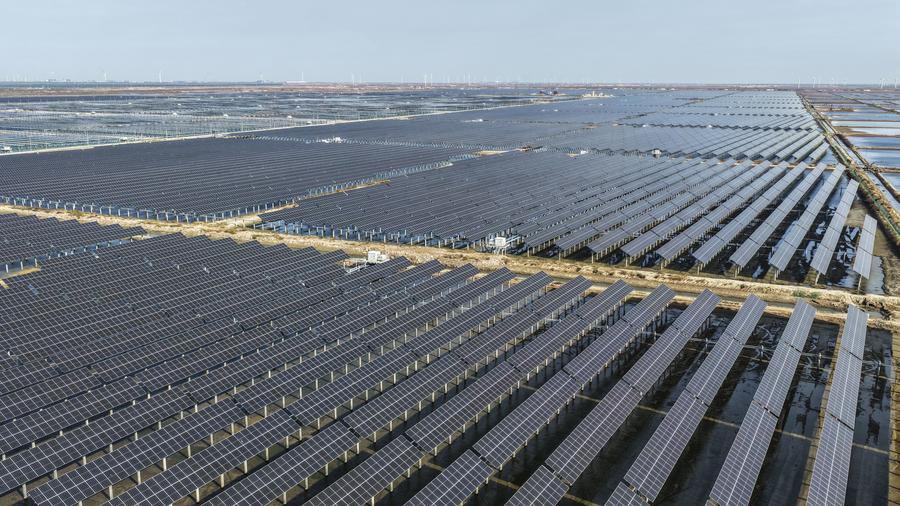
The "efficiency-to-growth" ratio is the key metric to watch here. As China aims for a 100% green energy transition in the long term, the 6.1% increase in consumption must be met by a corresponding increase in non-fossil fuel generation—primarily wind and solar, which now contribute a significant percentage to the national mix. If the energy density of the secondary industry continues to grow at 6.3%, the lifespan of current coal-fired baseload plants may need to be balanced with a 20% to 30% increase in Battery Energy Storage Systems (BESS) to manage the intermittency of renewables.
Ultimately, the first two months of 2026 set a high-performance benchmark for the rest of the year. The 323.1 billion kWh consumed by the tertiary sector is a strong signal that the "digital surge"—including data centers and EV charging networks—is becoming a dominant factor in the national energy budget. For global stakeholders, this 1.65 trillion kWh figure is proof that the "industrial heartbeat" of the world's second-largest economy is beating at a faster, more technologically intensive frequency than in the previous 24-month cycle.
News source:https://peoplesdaily.pdnews.cn/business/er/30051655762